
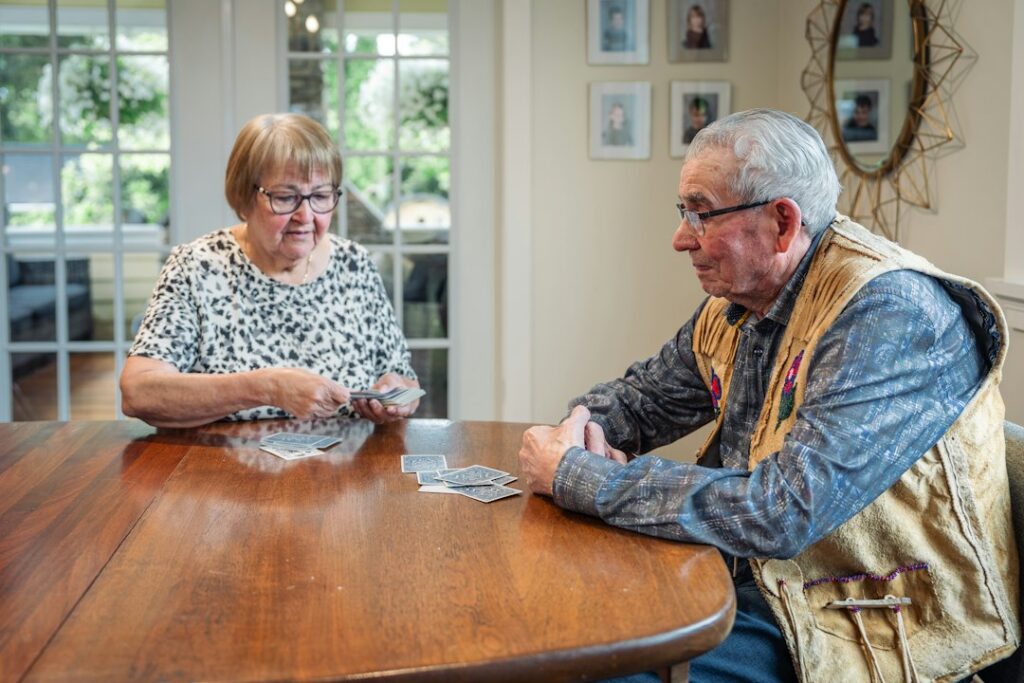
Why do games and pastimes matter in assisted living?
Games and pastimes give residents enjoyable ways to stay mentally active, socially connected, and engaged in daily life. They can also support routine, confidence, conversation, movement, and a sense of personal choice.
Activities do not need to be complicated or competitive. A familiar card game, a short craft project, music, or a quiet puzzle may be more meaningful than a large organized event. The most successful pastimes match each resident’s abilities, interests, energy level, and comfort.
For residents in Duquesne, seasonal weather can also influence activity choices. Cold, wet, or snowy days may make indoor recreation especially valuable, while mild days may allow for supervised outdoor games, porch conversations, or walks.
What are favorite games in assisted living?
Popular games are usually familiar, easy to explain, and flexible enough for different ability levels. Residents often enjoy activities that encourage conversation without placing pressure on speed or memory.
Common choices include:
- Large-print playing cards
- Bingo with oversized cards and markers
- Checkers, dominoes, and simple board games
- Crossword puzzles and word searches
- Jigsaw puzzles with larger pieces
- Trivia based on music, history, television, or local memories
- Matching games using pictures or familiar objects
- Dice games with simple rules
- Tabletop bowling or ring-toss games
- Group guessing games involving songs, sayings, or everyday objects
Traditional games can be especially comforting because residents may already know the rules. Familiarity reduces frustration and allows people to join a group without needing a lengthy explanation.
Some games can be adapted by using larger print, high-contrast materials, fewer pieces, or shorter rounds. A resident who once enjoyed complex strategy games may still participate when the activity is adjusted to reduce visual, physical, or memory-related demands.
Which pastimes support memory and mental stimulation?
Mental stimulation does not require difficult testing. Activities that invite recognition, storytelling, sorting, planning, or gentle problem-solving can provide useful cognitive engagement.
Word games may include naming items in a category, finishing common sayings, identifying song lyrics, or finding words that begin with a particular letter. Trivia can be organized around a resident’s interests rather than general knowledge. For example, questions may focus on gardening, classic films, baseball, cooking, holidays, or household traditions.
Reminiscence activities are also valuable. Looking at old-fashioned household objects, postcards, tools, fabric samples, or photographs can encourage residents to share memories. The goal is not to test whether someone remembers every detail. Conversation and personal expression matter more than having a correct answer.
Puzzles should be selected carefully. A 500-piece puzzle may be enjoyable for one person and discouraging for another. Smaller puzzles with clear images, larger pieces, and strong color contrast are often easier to use.
What activities are good for residents with limited mobility?
Many enjoyable pastimes can be completed while seated at a table or in a comfortable chair. Limited mobility does not mean a resident must be left out of group recreation.
Suitable options include:
- Seated balloon volleyball using a lightweight balloon
- Scarf or ribbon movement with music
- Tabletop ring toss
- Soft-ball target games
- Seated stretching paired with music
- Painting, coloring, or collage-making
- Folding towels or sorting safe household items
- Hand-clapping games and rhythm activities
- Indoor gardening with small containers
- Guided breathing or relaxation exercises
Activities should allow residents to participate at their own pace. A person may prefer to watch a game, keep score, choose music, or help organize supplies instead of taking part physically. These roles still provide social involvement and purpose.
Any activity involving movement should allow clear space, stable seating, and enough time for residents to change position safely. Wheelchairs, walkers, hearing devices, and other mobility supports should not be treated as obstacles to participation.
Are arts and crafts popular in assisted living?
Arts and crafts are often popular because they offer both self-expression and a finished item to enjoy or share. Projects can be simple, useful, seasonal, or connected to residents’ past hobbies.

Examples include watercolor painting, coloring, greeting cards, paper flowers, seasonal decorations, simple sewing, knitting, bead sorting, and decorated picture frames. Some residents may prefer practical crafts such as folding, arranging, or assembling rather than drawing or painting.
Supplies should be selected with safety and ease of use in mind. Large-handled brushes, thick pencils, easy-grip scissors, non-toxic materials, and prepared project pieces can help residents with arthritis, weakness, or reduced coordination.
Craft activities should not be judged mainly by neatness. The value may come from choosing colors, working with the hands, talking with others, or remembering a past creative interest.
How does music fit into daily recreation?
Music can support mood, memory, movement, and social connection. Residents may enjoy sing-alongs, rhythm instruments, familiar recordings, or quiet listening sessions.
A music activity might include:
- Singing familiar songs
- Guessing a song from a short introduction
- Clapping or tapping along to a steady beat
- Discussing favorite performers or dances
- Listening to music connected with holidays or life events
- Using simple instruments such as shakers or hand drums
Music preferences vary widely. A group should not assume that every older adult enjoys the same style. Offering several choices and inviting resident suggestions makes participation more personal.
Music should also be used thoughtfully. Loud sound can be uncomfortable for people with hearing loss, sensory sensitivity, headaches, or cognitive impairment. Moderate volume and clear instructions make group activities easier to follow.
What are good pastimes for quiet or independent time?
Not every resident wants a busy group activity. Quiet recreation gives people a chance to relax, concentrate, or enjoy personal interests without conversation.
Independent options may include reading large-print books, listening to audiobooks, completing puzzles, looking through magazines, doing simple embroidery, journaling, coloring, arranging flowers, or watching familiar educational programs.
A small activity basket can make independent time easier. It might contain a large-print word search, colored pencils, a simple puzzle, a deck of cards, and a notepad. Materials should be clearly labeled and stored where residents can reach them safely.
Quiet activities are particularly useful during transition periods, such as before meals, after appointments, or during bad weather when outdoor plans are not practical.
How can families choose meaningful games for a resident?
The best activity is usually connected to the resident’s history, not merely to age. Families can share information about hobbies, occupations, favorite music, holiday traditions, pets, sports, cooking, gardening, or games played earlier in life.
It also helps to observe how the resident responds. Signs of a good fit may include smiling, asking questions, staying involved, talking with others, or returning to the activity later. Signs that an activity needs adjustment may include frustration, withdrawal, fatigue, or repeated difficulty understanding the instructions.
Participation should remain voluntary. A resident may enjoy the same pastime one day and prefer rest the next. Offering choices rather than insisting on participation protects dignity and allows recreation to remain enjoyable.
What makes an assisted living activity successful?
A successful activity is accessible, respectful, and matched to the people taking part. It does not have to fill a large room or produce a perfect finished project.
Good planning usually includes clear instructions, suitable lighting, comfortable seating, manageable group sizes, and materials that are easy to see and handle. Activities work best when residents can participate in different ways, including playing, observing, talking, helping, or taking a brief break.
Games and pastimes are most meaningful when they reflect residents as individuals. A quiet puzzle, a lively round of bingo, a familiar song, or a conversation about past hobbies can each contribute to a satisfying day.
